
MOHAP LicensedNo. 5889VHC5-110626
Book Appointment
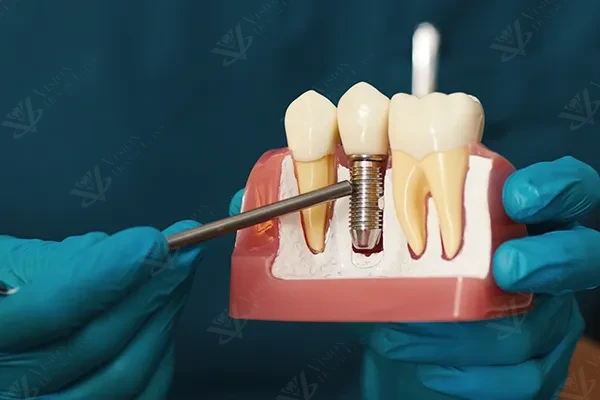
Losing a tooth can affect more than just your appearance. It can change the way you eat, speak, and even how you feel about yourself. Fortunately, modern dentistry offers a solution that closely replicates the look, feel, and function of a natural tooth: the dental implant. In this comprehensive guide, we walk you through everything you need to know about dental implants, from the science behind them to the aftercare that keeps them lasting a lifetime.
A dental implant is a small, screw-shaped post made from biocompatible titanium that is surgically positioned into the jawbone beneath the gum line. It serves as an artificial replacement for the root of a missing tooth. Once placed, the implant undergoes a biological process called osseointegration, during which the surrounding bone tissue grows around and bonds directly with the titanium surface. This creates an exceptionally stable and permanent foundation.
Once the implant has fully integrated with the bone, it can support a variety of dental restorations, including a single crown to replace one missing tooth, a bridge to span a gap of several teeth, or even a full denture to restore an entire arch. The result is a restoration that is anchored securely within the jaw, rather than sitting on top of the gums or relying on neighbouring teeth for support.
Dental implants offer a range of advantages that set them apart from traditional tooth replacement methods such as removable dentures or fixed bridges. Here are the key reasons patients and dentists alike consider implants the gold standard:
Because implants are anchored in the jawbone just like a natural tooth root, they look and feel remarkably authentic. The custom-crafted crown that sits on top of the implant is colour-matched and shaped to blend seamlessly with your existing teeth. There is no slipping, no adhesive, and no awkward clasps. Many patients forget they even have an implant after a short adjustment period.
Unlike removable dentures, which can shift while eating or speaking, implants remain firmly in place. This means you can bite into an apple, chew a steak, or speak in public without worry. The stability of an implant-supported restoration brings a level of confidence that removable options simply cannot match.
When a tooth is lost, the jawbone in that area begins to deteriorate because it no longer receives the mechanical stimulation that a tooth root provides. Over time, this bone loss can alter facial structure and make future dental work more challenging. Dental implants are the only tooth replacement option that directly stimulates the jawbone, helping to preserve its density and volume for years to come.
With diligent oral hygiene and regular dental check-ups, a well-placed implant can last a lifetime. While the crown may eventually need replacement after 15 to 20 years of normal wear, the titanium post itself remains permanently integrated in the bone. This makes implants one of the most cost-effective solutions over the long term, despite a higher initial investment.
A gap in your smile can take a toll on self-esteem. Dental implants restore not only function but also the confidence to smile freely, laugh without hesitation, and engage in social situations without self-consciousness.
Dental implants are the closest thing modern dentistry has to growing a new tooth. They are designed to look, feel, and function just like the real thing.
Understanding the journey from the initial consultation to the final restoration can help ease any concerns. While every case is unique, the implant process generally follows three main phases:
Your implant journey begins with a thorough assessment. This includes a clinical examination of your oral health, a review of your medical history, and advanced imaging. At Vision Dental Clinic, we use CBCT (Cone Beam Computed Tomography) 3D scans to create a detailed map of your jawbone, nerves, and sinus cavities. This allows Dr. Hussien to evaluate bone density, identify the optimal implant position, and digitally plan the entire procedure before any surgery takes place.
The surgical placement of the implant is performed under local anaesthesia, ensuring a pain-free experience. Using a surgical guide produced from the CBCT data, the implant is inserted at the precise angle, depth, and position that was planned digitally. This guided approach is minimally invasive and significantly reduces surgical time and post-operative discomfort. After placement, a healing period of approximately 6 to 12 weeks follows, during which osseointegration takes place.
Once the implant has fully bonded with the jawbone, an abutment (a small connecting piece) is attached to the implant post. A custom crown, bridge, or prosthetic is then designed using digital CAD/CAM software and fabricated to match the shape, shade, and contour of your natural teeth. The restoration is fitted, adjusted, and polished, completing your new smile.
Most adults with reasonably good general health are suitable candidates for dental implants. The primary requirements include:
The only way to know for certain whether implants are right for you is through a personalised consultation that includes clinical examination and 3D imaging.
One of the great advantages of dental implants is that they do not require any special maintenance beyond what you would do for your natural teeth. A consistent daily routine will keep your implant healthy for decades:
At Vision Dental Clinic in Abu Dhabi, dental implants are performed by Dr. Hussien Tahoun, an oral and maxillofacial surgeon with over 35 years of clinical experience and more than 5,000 implants placed. Our clinic is built around precision, predictability, and patient comfort.
We exclusively use Straumann implants, the world's most clinically documented implant system, renowned for their SLActive surface technology that accelerates healing by up to 40% compared to conventional implants. Every case is planned using CBCT-guided surgical protocols, meaning the implant position is determined digitally before any incision is made. Surgical guides are produced to ensure the implant is placed at the exact location, angle, and depth that was planned.
Our in-house dental laboratory uses CAD/CAM technology and Ivoclar ceramics to design and fabricate crowns, bridges, and prosthetics on-site, reducing turnaround times and ensuring precise fit and aesthetics.
Every implant placed at Vision Dental Clinic is digitally planned, surgically guided, and restored with in-house precision. No shortcuts, no compromises.
Keep Reading
Discover the materials behind modern dental implants, from titanium alloys to zirconia alternatives.
Read articleLearn how 3D cone-beam imaging improves safety and precision in implant planning and oral surgery.
Read articleExplore how a combination of cosmetic treatments can transform your smile in just a few visits.
Read articleStart Your Journey
Book a consultation with Dr. Hussien. We'll assess your case with a CBCT scan and give you a clear treatment plan with timeline and cost — before any commitment.