
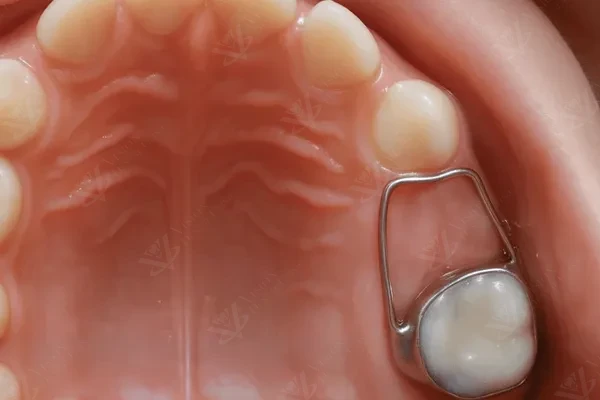
What Is a Space Maintainer?
A dental space maintainer is a small appliance, typically made from stainless steel or acrylic, that is custom-fitted to your child's mouth. Its purpose is simple but critically important: it holds open the space left by a prematurely lost baby tooth, preventing the neighboring teeth from drifting or tilting into the gap.
Without a space maintainer, the teeth on either side of the empty space can gradually shift position, blocking or redirecting the permanent tooth that is developing beneath the gum. This can lead to crowding, misalignment, and the need for more extensive orthodontic treatment later in life.
Why Baby Teeth Matter More Than You Think
Many parents assume that baby teeth are temporary and therefore unimportant. In reality, primary teeth serve several essential functions that directly influence your child's long-term dental health:
- Guiding permanent teeth: Baby teeth act as natural placeholders, reserving the correct amount of space in the jaw for each permanent tooth to erupt in its proper position
- Supporting jaw development: The presence of primary teeth stimulates healthy bone growth in the jaw during early childhood
- Enabling proper nutrition: Children need their teeth to chew food effectively for proper nutrition and digestion
- Speech development: Certain teeth, particularly the front ones, are essential for developing clear speech patterns
When a baby tooth is lost prematurely, whether through decay, trauma, or infection, the consequences can extend far beyond the immediate gap. The neighboring teeth begin to shift within weeks, and the permanent tooth below may become impacted, meaning it cannot erupt properly because the space it needs has been partially or fully closed.
Losing a baby tooth early does not mean the permanent tooth will arrive sooner. In many cases, the adult tooth is still months or even years away from being ready, making a space maintainer essential during that waiting period.
When Is a Space Maintainer Needed?
Not every lost baby tooth requires a space maintainer. Your child's dentist will evaluate the specific circumstances and recommend one when:
- A baby tooth is lost earlier than expected due to severe decay, trauma, or infection
- The permanent tooth is not yet ready to erupt and is still developing within the jawbone
- There is a significant risk of adjacent teeth shifting into the empty space
- The lost tooth is a back tooth (molar), where space closure happens more rapidly and has greater consequences for alignment
If the permanent tooth is already close to erupting, as confirmed by an X-ray, a space maintainer may not be necessary. Your dentist will assess the timing carefully to make the best recommendation for your child.
Types of Space Maintainers
Space maintainers come in several designs, each suited to different situations depending on which tooth was lost, the child's age, and the overall dental development. They are broadly categorized into fixed and removable types.
Fixed Space Maintainers
Fixed maintainers are cemented onto adjacent teeth and remain in place until the permanent tooth is ready to erupt. They are the most common choice for younger children because they cannot be removed, lost, or forgotten.
- Band and loop: The most frequently used type. A metal band wraps around an adjacent tooth, and a wire loop extends across the gap to hold the space open. Ideal for single missing teeth.
- Crown and loop: Similar to the band and loop, but uses a stainless steel crown instead of a band on the anchor tooth. Used when the adjacent tooth also needs a crown due to decay.
- Distal shoe: A specialized appliance used when a primary second molar is lost before the first permanent molar has erupted. A metal guide is inserted beneath the gum to direct the erupting permanent molar into the correct position.
- Lingual arch: A wire running along the inside (lingual side) of the lower teeth, attached to bands on the molars on both sides. Used when multiple teeth are missing in the lower arch.
- Transpalatal arch: A wire connecting the upper molars across the palate. Used to maintain space in the upper arch when teeth are lost on both sides.
- Nance appliance: Similar to a transpalatal arch but includes an acrylic pad that rests against the roof of the mouth for additional stability. Often used in the upper jaw.
Removable Space Maintainers
Removable space maintainers resemble a small partial denture or retainer. They may include an artificial tooth to fill the visible gap, which can be helpful when a front tooth is lost. These are typically recommended for older, more responsible children who can reliably wear and care for the appliance. However, fixed options are generally preferred for their reliability.
The Fitting Process
Getting a space maintainer is a straightforward process that typically requires two to three visits:
- Evaluation and impressions: The dentist examines your child's mouth and takes impressions or digital scans of the teeth. X-rays are taken to assess the developing permanent tooth and determine the best type of maintainer.
- Custom fabrication: The impressions are sent to a dental laboratory where the space maintainer is custom-made to fit your child's mouth precisely.
- Cementation and fitting: At the next appointment, the space maintainer is tried in, adjusted for comfort, and cemented into place. The dentist ensures the fit is secure and comfortable.
- Follow-up visits: Regular check-ups are scheduled to monitor the appliance, check for any issues, and watch for signs that the permanent tooth is beginning to erupt.
Caring for a Space Maintainer
Space maintainers are durable, but they do require some care to keep them functioning properly throughout the time your child needs them:
- Avoid sticky and chewy foods such as gum, caramel, toffee, and gummy sweets, which can loosen or dislodge the appliance
- Do not push or pull at the maintainer with the tongue or fingers, as this can bend the wire or loosen the cement
- Maintain thorough oral hygiene by brushing carefully around the appliance and flossing as directed by the dentist
- Attend regular dental visits so the dentist can check the maintainer and monitor the progress of the developing permanent tooth
- Report any looseness or discomfort immediately so the appliance can be re-cemented or adjusted before any space is lost
When Is the Space Maintainer Removed?
The space maintainer is removed when the permanent tooth beneath the gap begins to erupt through the gum. Your child's dentist will monitor this progression through regular check-ups and X-rays. Removing the maintainer at the right time is important: too early, and the space may still close; too late, and the appliance could interfere with the erupting permanent tooth.
Removal is a quick and painless process. The cement is gently broken, and the appliance is lifted away. No anesthesia is required, and your child can eat and drink normally immediately afterward.
Pediatric Dental Care at Vision Dental Clinic
At Vision Dental Clinic Abu Dhabi, we understand that visiting the dentist can be a source of anxiety for children. Our team is experienced in pediatric dentistry and takes a gentle, patient approach to make every visit a positive experience.
We use digital scanning technology whenever possible to avoid uncomfortable traditional impressions, and our child-friendly environment helps young patients feel safe and relaxed. From preventive care and space maintainers to early orthodontic assessments, we provide comprehensive dental care designed to give your child the best start for a lifetime of healthy smiles.
If your child has lost a baby tooth early, or if you have concerns about their dental development, we encourage you to schedule a consultation so we can evaluate whether a space maintainer or other intervention would be beneficial.